
About Sauna use
A scientific summary with interesting Sauna facts about health effects, use, Sauna infusions and aromatherapy.
The effects of saunas on health and longevity
Saunas as hormetic stressors
Saunas as hormetic stressors
Regular sauna use acts as controlled heat stress, or hormesis. In response, the body activates mechanisms that promote long-term health. These mechanisms include the activation of heat shock proteins (HSPs), improved vascular function, and neuroprotective effects. Sauna infusions play a valuable complementary role by intensifying thermal stress and providing sensory stimulation.
Cardiovascular health
Long-term Finnish studies show a significant reduction in cardiovascular mortality with two to three sauna sessions per week (approximately a 20-30% risk reduction) and with four to seven sauna sessions per week (up to a 50% risk reduction).
Possible mechanisms include:
- Increased heart rate (comparable to moderate endurance training
- Improved endothelial function
- Lower blood pressure
Aromatherapy aspect: Infusions with eucalyptus or pine can promote subjective breathing relief and increase the depth of breathing, which supports cardiopulmonary stress during the sauna session.
Neuroprotection, dementia, and Alzheimer’s disease
One of the best-known Finnish cohort studies shows a 66% lower risk of Alzheimer’s disease with 4–7 sauna sessions per week.
Possible mechanisms:
- Increased expression of heat shock proteins (protection against protein misfolding)
- Improved cerebral blood flow
- Reduction in systemic inflammation markers
Aromatherapy aspect: Lavender, rosemary, and citrus scents are associated with cognitive activation and stress reduction. The combination of heat, relaxation, and olfactory stimulation can positively influence neuroplastic processes.
Metabolism, insulin sensitivity, and inflammation
Regular sauna exposure lowers chronic inflammation markers (CRP), improves insulin sensitivity, and supports metabolic flexibility.
Possible mechanisms:
- intensifies the heat stimulus in the short term
- enhances the hormonal response (adrenaline and noradrenaline).
Aromatherapy Aspect: Traditionally, invigorating scents such as mint or lemon are used to enhance these effects.
ken.
Immune system and susceptibility to infection
Studien zeigen eine reduzierte Häufigkeit von Atemwegsinfekten bei regelmäßiger Saunanutzung.
Possible mechanisms include:
- increased core body temperature (fever-like effect)
- activation of the innate immune response.
Aromatherapy aspect: Certain essential oils, such as eucalyptus, thyme, and tea tree oil, have antimicrobial properties. When used in infusions, these oils can improve the perception of breathing and contribute to the prevention of infections.
Mental Health, Stress, and Sleep
Saunas can help reduce stress and improve sleep quality, especially when used in the evening.
Possible mechanisms:
- Promotes the release of endorphins and serotonin
Aromatherapy aspect: Calming scents, such as lavender, lemon balm, and sandalwood, can support parasympathetic effects and promote relaxation and recovery.
Overall classification of sauna fragrance and infusion concepts
From a scientific point of view, sauna infusions with essential oils complement the classic heat stimulus by:
- Sensory stimulation
- Respiratory effects
- Psychovegetative effects (activation vs. relaxation)
While many epidemiological studies primarily examine the sauna as a heat application, physiological and aromatherapeutic evidence suggests that infusions can qualitatively enhance the positive effects of sauna use for users.
In a Nutshell
What happens in the body during a sauna session?
During a sauna session, the body is heated to high temperatures. Blood vessels dilate, circulation is stimulated, and the body begins to sweat. This activates metabolic processes and helps muscles relax.
What temperatures are typical in a sauna?
Temperatures in a classic Finnish sauna usually range between 80°C and 100°C (176°F to 212°F). The air is relatively dry, making the heat more tolerable.
How long should a sauna session last?
A sauna session typically lasts between 8 and 15 minutes. It’s important to listen to your body. Afterward, a cooling-off phase (e.g., with cold water) and a 10–15 minute rest period are recommended.
Why are sauna infusions (Aufguss) performed?
Sauna infusions temporarily increase humidity and intensify the heat sensation. Essential oils or sauna fragrances are often used to enhance the experience.
What role do sauna fragrances play in infusions?
Sauna fragrances are added to the infusion water, creating a more intense aromatic experience. Depending on the scent, they can be refreshing, invigorating, or relaxing.
Optimal Sauna Protocol
According to Dr. Rhonda Patrick
- Temperature: 80–100 °C
- Duration: 15–25 minutes per session
- Frequency: 2–7 times per week
- Cool down between sessions.
You can use infusions to modulate the intensity, perception, and quality of your experience by increasing the thermal load in the short term.
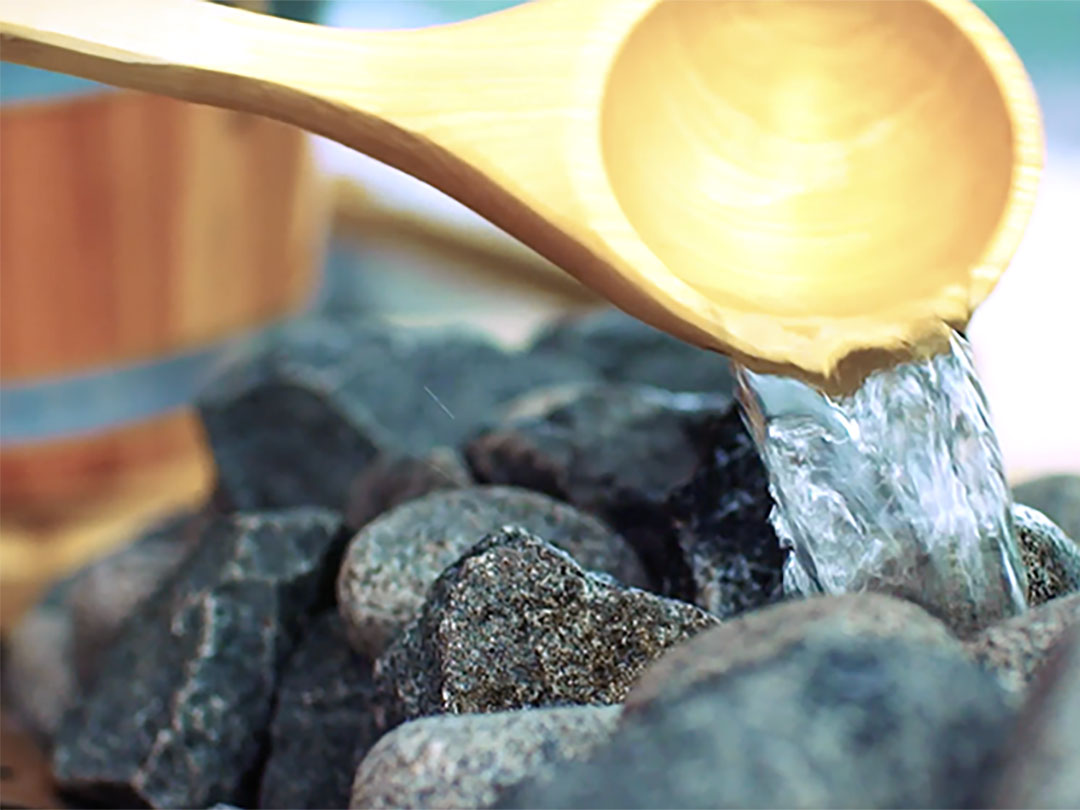
Possible Effects of Essential Oils in Sauna Infusions
Special sauna fragrance concentrates are often used for special sauna infusions. These have been developed for high temperatures and release intense fragrances. Here are a few examples of the possible effects of the oils they contain. You can find out more about our fragrance compositions on our fragrance knowledge page. You can also find more oils and their effects on our page about the effects of essentioal oils.
Eucalyptus (Eucalyptus globulus):
Expectorant, bronchodilator, and antimicrobial. 1,8-cineole improves mucociliary clearance, facilitates breathing, and has immunomodulatory effects. It is particularly suitable for preventing colds and treating respiratory problems.
Peppermint (Mentha piperita):
Menthol has a cooling effect, dilates the bronchi, and stimulates blood circulation. It subjectively supports deep breathing and increases alertness and concentration.
Pine, spruce, and mountain pine:
Terpene-rich oils with secretolytic and mild anti-inflammatory effects. They promote free breathing and have a traditional strengthening effect on the respiratory tract.
Thyme (Thymus vulgaris):
Strongly antimicrobial, antiviral, and expectorant. It supports the immune system, especially during cold and flu season.
Tea tree (Melaleuca alternifolia):
Broad-spectrum antimicrobial against bacteria, viruses, and fungi. It can contribute to hygienic indoor air and infection prevention.
Lavender (Lavandula angustifolia):
Calming, anxiolytic, and sleep-promoting. It has a balancing effect on the nervous system and supports skin soothing and regeneration.
Lemon (Citrus limon):
Mood-lifting and mildly immune-stimulating; promotes blood circulation and alertness. It subjectively supports a feeling of freshness.
Orange/grapefruit:
Stress-reducing and mood-lifting with a parasympathetic effect. It supports relaxation while promoting positive emotional activation.
Rosemary (Rosmarinus officinalis):
Promotes blood circulation and stimulates cognitive function. It supports circulation, concentration, and mental performance.
Cypress (Cupressus sempervirens):
Vascular tonic that regulates blood circulation. It supports venous return and respiratory awareness.
Juniper (Juniperus communis):
Detoxifying and blood circulation stimulant; traditionally used for muscle relaxation. Supports skin metabolism.
Lemongrass (Cymbopogon citratus):
Antimicrobial, invigorating, and skin-clarifying. Promotes a feeling of freshness and sensory activation.
Sandalwood (Santalum album):
Deeply relaxing and stress-reducing. It supports parasympathetic dominance and meditative states.
Laukkanen T. et al. (2015). Sauna bathing is associated with reduced cardiovascular mortality and all-cause mortality. JAMA Internal Medicine.
Laukkanen T. et al. (2017). Association between sauna bathing and risk of dementia and Alzheimer’s disease. Age and Ageing.
Patrick R., Allred K. (2020). Sauna Benefits Deep Dive and Optimal Use. MedCram / FoundMyFitness (Video, 1:21:28).
Huberman A., Fridman L. (2021). Heat exposure, sauna and human performance. Huberman Lab Podcast.
Heckman M.A. et al. (2010). Menthol: physiological effects and applications. International Journal of Neuroscience.
Juergens U.R. et al. (2003). Anti-inflammatory activity of 1,8-cineole in bronchial asthma. Respiratory Medicine.
Kamatou G.P.P. et al. (2013). Thymus vulgaris essential oil: pharmacological properties. Journal of Essential Oil Research.
Carson C.F. et al. (2006). Melaleuca alternifolia (Tea Tree) oil: antimicrobial properties. Clinical Microbiology Reviews.
Koulivand P.H. et al. (2013). Lavender and the nervous system. Evidence-Based Complementary and Alternative Medicine.
Buchbauer G. et al. (1993). Aromatherapy: evidence for sedative effects of essential oils. Journal of Pharmaceutical Sciences.
Ali B. et al. (2015). Essential oils used in aromatherapy: A systemic review. Asian Pacific Journal of Tropical Biomedicine.
Lee M.S. et al. (2012). Aromatherapy for health care: mechanisms and evidence. Journal of Alternative and Complementary Medicine.